


Yo, what's up everyone! As a spring washers supplier, I often get asked about the elasticity of spring washers. So, I thought I'd write this blog to break it down for you.

Understanding Spring Washers
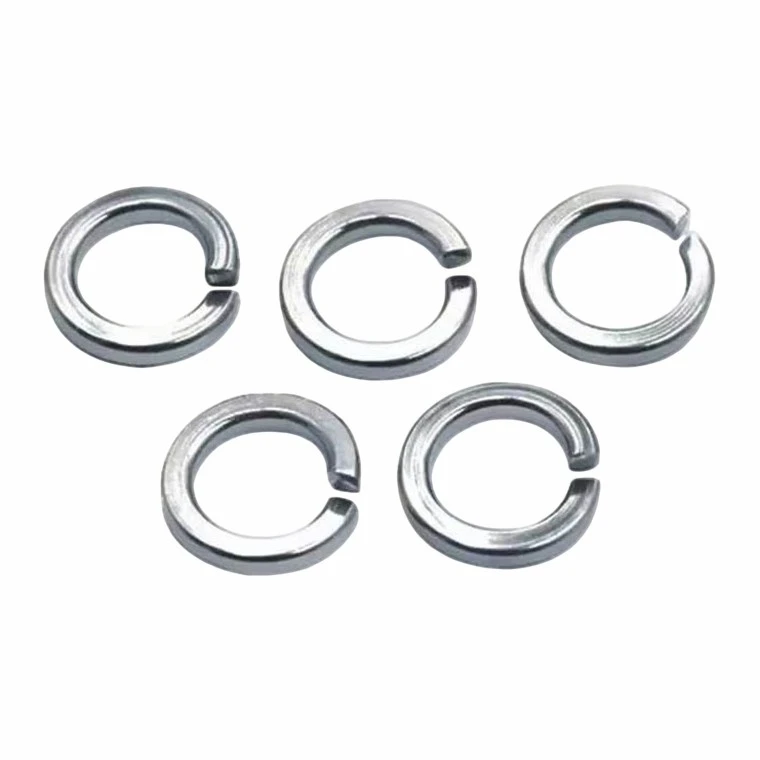
First off, let's talk a bit about spring washers. These little guys are super important in all sorts of mechanical applications. They're designed to provide a spring - like action, which helps to keep nuts and bolts tight. You know how sometimes, due to vibrations, movement, or temperature changes, nuts can loosen up? Well, that's where spring washers come in. They create a constant pressure between the fastener and the surface it's attached to, preventing that annoying loosening.
We offer different types of spring washers, like the Black Oxide Spring Lock Washer, Zinc Plated Spring Lock Washer, and Stainless Steel Spring Lock Washer. Each of these has its own unique properties, but they all rely on elasticity to do their job.
What is Elasticity?
Elasticity is basically the ability of a material to return to its original shape after being stretched or compressed. Think of a rubber band. When you pull it, it stretches, but as soon as you let go, it goes back to how it was. Spring washers work in a similar way. When you tighten a nut and bolt with a spring washer in between, the washer gets compressed. But it doesn't stay that way; it tries to expand back to its original shape. This creates a force that keeps the fastener tight.
The elasticity of spring washers is measured by something called the spring rate. The spring rate tells you how much force is needed to compress the washer by a certain amount. For example, if a washer has a spring rate of 10 pounds per inch, it means you need to apply 10 pounds of force to compress the washer by 1 inch. The higher the spring rate, the stiffer the washer is, and the more force it can withstand before it gets permanently deformed.
Factors Affecting Elasticity
There are a few things that can affect the elasticity of spring washers.
Material: The material the washer is made of is a big factor. Stainless steel, for example, is known for its good corrosion resistance and relatively high elasticity. Zinc - plated washers are also quite elastic and offer some protection against rust. Black oxide washers have a different surface treatment, which can also impact their elasticity. Each material has its own atomic structure, and this determines how it behaves under stress. Materials with a more flexible atomic structure are generally more elastic.
Design: The shape and size of the spring washer play a role too. Washers with a larger outer diameter or a thicker cross - section might have a different spring rate compared to smaller, thinner ones. The way the washer is coiled or wound also affects its elasticity. Some spring washers are curved, like wave washers, and their unique shape gives them different elastic properties compared to flat - style spring washers.
Manufacturing Process: How the washer is made can also influence its elasticity. Precision manufacturing techniques ensure that the washer's dimensions are accurate and that the material properties are consistent. If there are any flaws in the manufacturing, like uneven thickness or impurities in the material, it can reduce the washer's elasticity and performance.
Measuring Elasticity
To measure the elasticity of a spring washer, we use special testing equipment. A common test is the compression test. In this test, a spring washer is placed between two flat plates, and a gradually increasing force is applied to compress the washer. The displacement of the washer (how much it gets compressed) is measured at the same time. By plotting the force applied against the displacement, we can get a graph that shows the spring rate and the elastic range of the washer.
The elastic range is the part of the graph where the washer can return to its original shape after the force is removed. Once the force exceeds a certain limit, the washer enters the plastic range, and it won't go back to its original shape completely. This is important to know because we want our spring washers to stay within their elastic range during normal use.
Why Elasticity Matters in Applications
The elasticity of spring washers is crucial in many applications. In automotive engines, for example, there are a lot of moving parts that generate vibrations. If the nuts and bolts in the engine aren't kept tight, it can lead to serious problems, like leaks or component failure. Spring washers with the right elasticity ensure that the fasteners stay in place, even under harsh conditions.
In the aerospace industry, where safety is of utmost importance, the elasticity of spring washers is carefully considered. Aircraft components are subjected to extreme forces and temperature changes during flight. Spring washers with proper elasticity help to maintain the integrity of the connections between different parts of the aircraft.
Our Spring Washers and Elasticity
As a spring washers supplier, we take the elasticity of our products very seriously. We use high - quality materials and advanced manufacturing processes to ensure that our washers have the right spring rates and elastic properties. Whether you need a Black Oxide Spring Lock Washer, Zinc Plated Spring Lock Washer, or Stainless Steel Spring Lock Washer, we've got you covered.
We also perform rigorous quality control checks to make sure that each washer meets our high standards. We test the elasticity of our washers regularly to ensure that they'll perform well in your applications.
Conclusion
So, there you have it—the lowdown on the elasticity of spring washers. It's a key property that determines how well these little components work to keep your fasteners tight. Whether you're in the automotive, aerospace, or any other industry that uses fasteners, choosing spring washers with the right elasticity is essential.
If you're in the market for high - quality spring washers, we'd love to chat with you. We can help you choose the right type of washer for your specific application. Just reach out to us, and we'll start the conversation about getting you the perfect spring washers for your needs.
References
- "Mechanical Engineering Design Handbook" by Myer Kutz
- "Materials Science and Engineering: An Introduction" by William D. Callister, Jr. and David G. Rethwisch