



Technical knowledge series | Piping, pressure and bolting
November 2026
1 A detail you can see on every flange
Walk along any piperack in a refinery, a chemical plant or a power station and look at the flanges. Almost everywhere the joint is closed by a headless rod with a nut at each end, not by a bolt with a hex head. The arrangement is so routine that it is rarely explained, yet it is not simply a habit passed down from one generation of fitters to the next. It rests on three separate arguments: one about the path the clamping force takes through the joint, one about how the joint is assembled and maintained, and one about what the standards actually write down.
For buyers and specifiers the difference matters more than it first appears. A flange closed with the wrong configuration, or with a stud a few millimetres too short, will still tighten up and will still look correct on the day of assembly. What it will not do is reach the preload the gasket needs, or keep it through the first thermal cycle. The three arguments below are worth knowing because each of them can be checked on a drawing, a purchase order or a delivery note.
2 Load path: what a stud does that a bolt cannot
2.1 Two bearing faces instead of one
A bolted joint is a closed loop of force. The fastener generates the clamp load, the flange faces react to it, and the gasket is compressed in between. With a hex bolt, the loop enters through the bolt head on one side and leaves through a nut on the other. The two contact surfaces therefore belong to two different components with different geometry: a forged or machined head with a fixed bearing area, and a separate nut.
A stud replaces the head with a second nut. Both ends of the loop are now the same product, usually a heavy hex nut to ASME B18.2.2: the same bearing area, the same hardness, the same face finish, the same socket, the same tightening tool. The friction condition at the two ends becomes comparable, and the relationship between applied torque and achieved preload becomes more repeatable. This is one of the quiet reasons why assembly procedures built around torque control behave better on studded joints, and why a joint tightened from both ends shows less scatter than one tightened against a head.
2.2 The shank can be sized for the joint, not for the head
On a hex bolt the shank is tied to the thread and the head is upset or forged onto the same bar. A stud is cut from bar stock, so the body between the two threaded ends can be turned to a diameter smaller than the thread. ASME B18.31.2 recognises both full-body and reduced-diameter-body studs and notes that a reduced body elongates more elastically for the same load. A more compliant fastener stores more elastic energy at the same preload, follows small face rotations and differential thermal movement of the joint, and gives back a more stable residual clamp load after the system settles.
The unthreaded body also keeps threads out of the clearance holes. Threads crossing a hole are a place where coating is damaged during assembly, where crevice corrosion starts, and where a burr can make the next disassembly a cutting job. With a stud, the working threads sit inside the nut, which is the one location a designer can actually control.
2.3 A plain hole locates the joint
Because there is no head, the stud only needs a clearance hole and two nut positions. Both flange faces can be machined identically, the bolt circle does not need a spotface on one side, and the stud can protrude on both faces for inspection and for tooling. In a pair of mating flanges it also means that either face can be the accessible one without changing the fastener list.
3 Serviceability: turning a nut instead of a whole bolt
3.1 Assembly from one side
The most practical argument is access. On a real flange you often cannot rotate a bolt at all: the head faces a valve body, a structural member, an insulation box, or the second flange of a pair installed close to a wall or a header. A stud has no head to swing, so the joint can be built from one side. The studs are screwed into the blind or tapped face first, the second flange is then slid over them, and only the accessible ends are nutted. That is precisely the configuration ASME B18.31.2 calls a tap-end stud, and it is why studs appear wherever equipment has to be positioned after the piping is already in place.
In maintenance the same geometry pays off again. A nut can be removed and replaced with a socket in a space where no wrench could ever reach a bolt head. A seized bolt, by contrast, often has to be cut, and the cut has to be made at a head that is buried against equipment.
3.2 The studs do the alignment and hold the gasket
A flange fully studded with protruding rods behaves like a set of dowels. The gasket stays where it was placed while the second flange is lowered onto it, and the ring-joint groove stays centred while the joint is closed. On large vertical flanges, and on ring-type joints where the gasket must seat in a groove before any load is applied, this is not a convenience but a requirement for a correct assembly.
3.3 Tensioning needs thread above the nut
Torque control converts an applied moment into preload through a friction coefficient that is never known to better than a broad band, because it depends on lubrication, coating, surface finish and the condition of the threads. Direct tensioning avoids that conversion: a hydraulic tensioner grips the thread above the nut, stretches the stud by a measured amount, and the nut is run down while the load is held. A stud with extra thread length is the natural carrier for this method, and a bolt head cannot offer the same purchase. This is one reason why studs dominate in joints where leak-tightness is a safety issue rather than a nuisance.
3.4 A replaceable, inspectable end
Nuts are consumables. They can be replaced, measured, retightened and marked without touching the stud. The stud itself carries the identification marking at both ends, so the grade can be verified after assembly from either side of the flange, which is useful when one side ends up facing a wall.
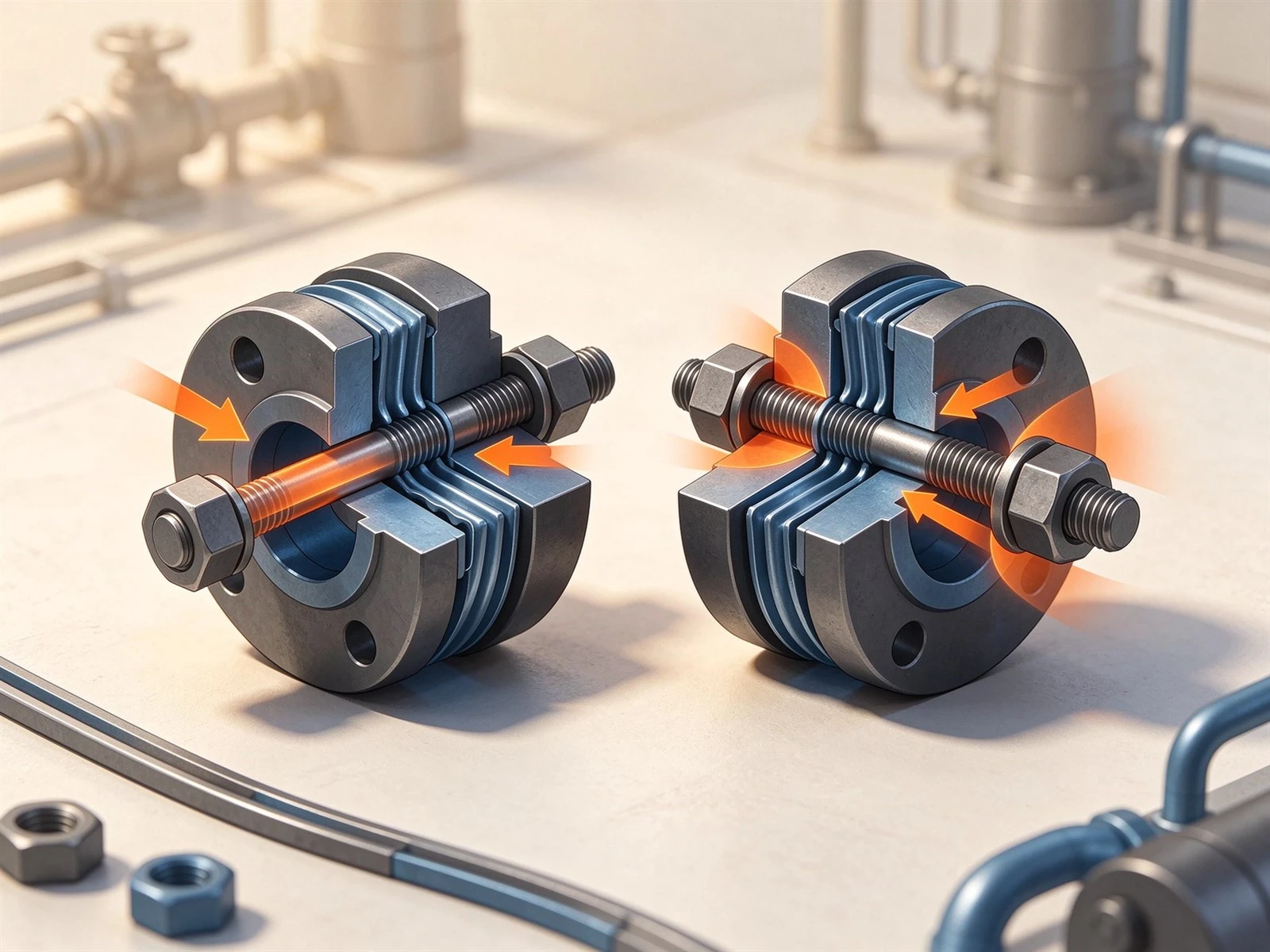
Figure 1 Load loop of a hex bolt (left) and of a stud with two nuts (right). The stud closed the loop with two identical bearing faces.
4 What the standards really say
4.1 The dimensional standards are stud-bolt standards
ASME B16.5 covers pipe flanges and flanged fittings from NPS 1/2 to NPS 24, and ASME B16.47 covers the large-diameter series. Their bolting tables are not lists of hex bolts. They list the number, diameter and length of stud bolts, on the basis that each stud is used with two heavy hex nuts. The standard therefore does not tell you which bolt to buy; it tells you which stud to buy.
Stud length is a derived dimension. It comes from the two flange thicknesses, the gasket thickness and the height of two nuts, so a change in gasket type changes the stud that is required. That is why the tables carry separate lengths for raised-face and ring-joint facings: the same flange, the same pressure class, a different stud. Ordering from a habit rather than from the table is one of the most common causes of a short stud on site.
4.2 The stud has its own product standard
ASME B18.31.2-2014 (R2019) covers continuous thread studs, double-end studs and flange bolting studs in the inch series, with the metric counterpart in ASME B18.31.1M. It defines the configurations, body diameters, thread lengths, points, the basis for measuring length and the identification marking. A flange bolting stud is defined there as a stud used primarily with flanges covered by ASME B16.5 and made from ASTM bolting materials.
The distinction is worth insisting on in a purchase order. A stud bolt is a product with a defined body, defined ends and a defined length basis. A length of all-thread rod cut to size is not the same thing, even when the thread and the grade happen to match, because the ends, the marking and the length tolerance are not controlled to the same rules.
4.3 Material and nut are a matched set
The bolting grades normally quoted for flanges are ASTM A193/A193M for high-temperature and high-pressure service and ASTM A320/A320M for low-temperature service. Grade B7, a chromium-molybdenum steel of the 4140 family, is the default for ambient and elevated temperature work; B16, a chromium-molybdenum-vanadium steel, is used where the temperature runs higher; B8 and B8M cover the austenitic stainless grades; L7 is the low-temperature grade, impact tested at minus 101 degrees Celsius.
Each stud grade has a designated nut grade in ASTM A194/A194M: 2H for B7, 8 and 8M for the stainless grades, 4 or 7 for L7. The pair is specified together because the nut must be able to develop the full strength of the stud without stripping or galling. A commercial nut with the right thread but the wrong grade is an invisible substitution, and it is only discovered when the joint is tensioned or when the certificate is audited.
4.4 Assembly is also a standard
ASME PCC-1, in its current 2022 edition, treats the flange joint as an assembly process rather than a single tightening step. It covers the cleaning and examination of contact surfaces, alignment, gasket installation, lubrication of the working surfaces, bolt numbering, tightening sequence and pattern, determination of target torque, records and disassembly. The scope applies to pressure-boundary joints with ring-type gaskets inside the bolt circle.
The existence of that document explains a good deal of the preference for studs. Almost everything PCC-1 asks an assembler to control, from target torque to the tightening pattern to the record of what was done, assumes a fastener that can be worked from both ends, retensioned in a defined sequence, and inspected afterwards.
4.5 On the metric side
European practice reaches the same conclusion by a different route. EN 1092-1 defines the flanges and their pressure designations, and EN 1515-1 addresses the selection of bolting for those flanges. Metric studs follow ASME B18.31.1M or the relevant ISO dimensional standard, with property classes to ISO 898-1 rather than the ASTM grades. The fastener looks different on the drawing, but the assembly logic is identical: a headless rod, two nuts, and a length derived from the joint.

Figure 2 Access is the decisive argument on site. A nut can be reached where a bolt head cannot.
5 Where a stud is not the answer
The preference is strong, but it is not universal, and a supplier who says otherwise is selling rather than advising. On small, low-pressure, non-critical joints a hex bolt is cheaper, faster to fit and one component instead of three. Where the joint is closed into a tapped hole in a non-pressure component, a tap-end stud is the correct product and a through bolt would be wrong. Where the envelope is tight, the extra thread that a stud needs above each nut can conflict with insulation, guards or adjacent pipe, and excessive protrusion adds a bending lever that the joint does not need.
Two nuts per stud also mean twice the components to control, and a stud that has been bottomed hard in a tapped hole, or whose inaccessible end has damaged threads, is a much more expensive problem than a damaged bolt. Austenitic stainless studs bring their own risk: nut and stud of the same grade gall readily, so assembly needs a suitable lubricant, slow rotation and a check that the nut has not seized halfway down.
Length is the other place where habit costs money. Longer is not safer. A stud should be long enough to give full nut engagement plus a defined protrusion, and no longer; the excess is weight, trapped water, a corrosion site and a lever arm.
6 What belongs on the purchase order
Product and standard. Write the product, not the material: stud bolt to ASME B18.31.2, continuous thread, with the thread size and class to ASME B1.1. All-thread rod is a different item.
Grade and marking. A193 B7 or A320 L7, with the grade symbol and the manufacturer's mark on both ends, and the nut grade stated as a matched item, not as an option.
Thread and length. Thread form and class, overall length and the length basis used by the standard, plus the required protrusion beyond each nut. State the gasket type the length was calculated for, because that is the variable most often changed later.
Coating and friction. The coating system, applied to stud and nut as a matched pair, and the friction coefficient it is expected to give. A torque value calculated for plain bolts will not produce the same preload on a coated joint.
Documentation. A mill certificate to EN 10204 3.1 for the heat number, impact test results where A320 applies, hardness results, and the marking that ties the delivered studs to those documents.
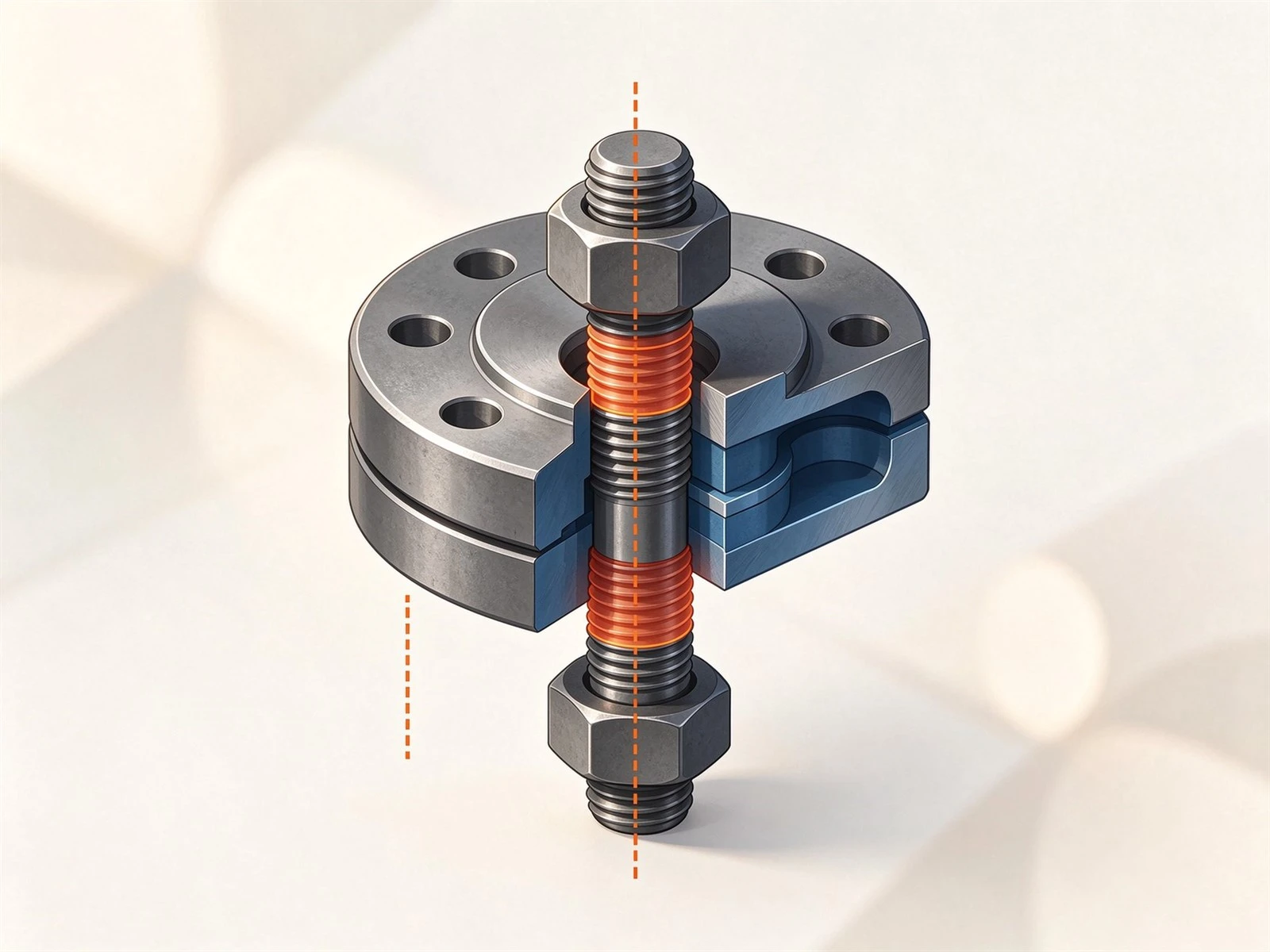
Figure 3 Length is a derived dimension: two flange thicknesses, the gasket and two nut heights, plus a defined protrusion.
7 Three answers, one fastener
The stud is preferred because it closes the load loop with two identical bearing faces instead of a head and a nut, because it lets a joint be built and maintained from one side, and because the standards that govern flanges, studs, materials and assembly were all written around it. None of the three arguments alone explains the practice. Together they explain why the detail on every flange has looked the same for decades, and why it is still worth checking on the purchase order.
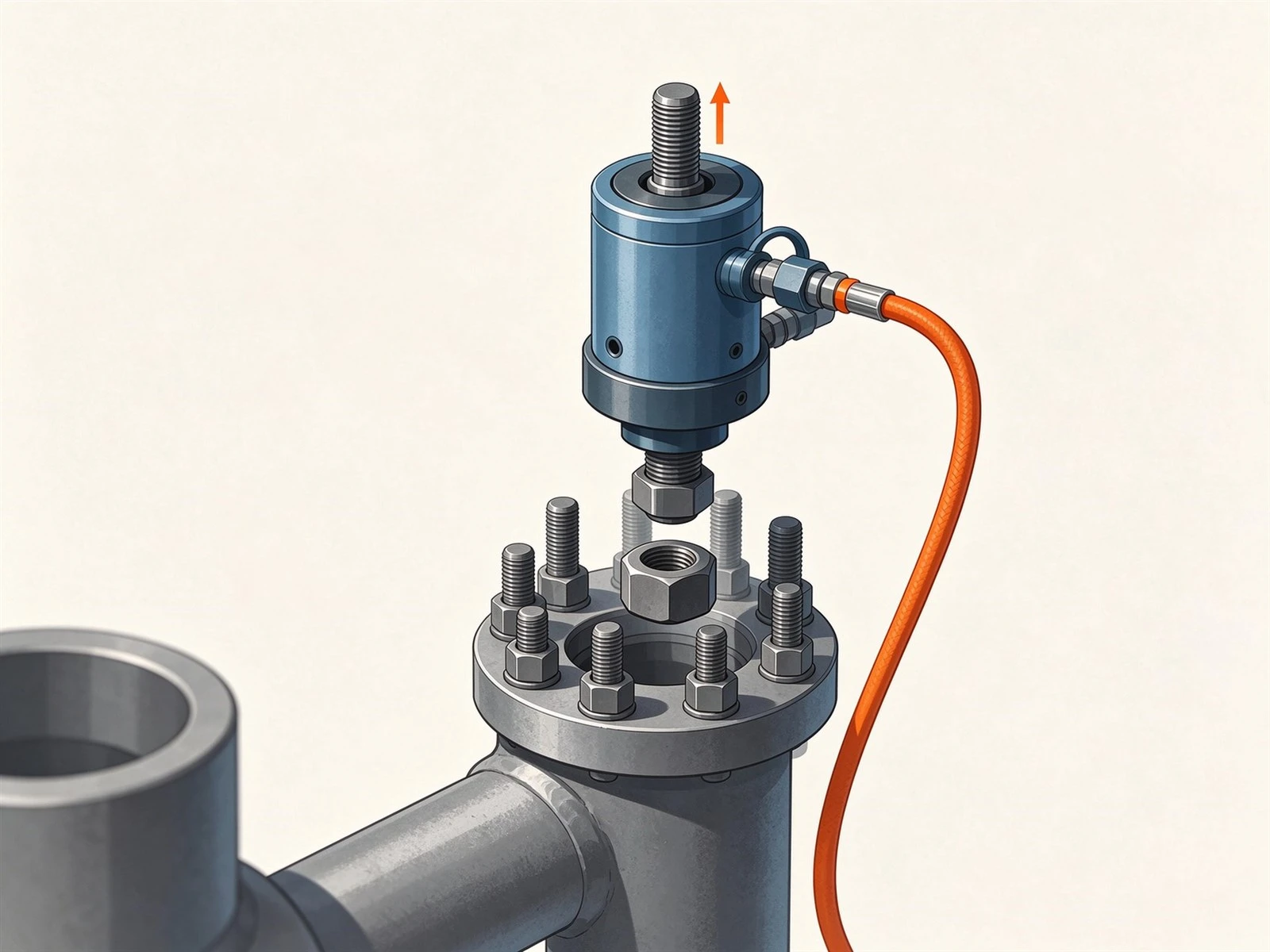
Figure 4 Hydraulic tensioning needs thread above the nut, which is a configuration a stud provides and a bolt head does not.
Standards referred to: ASME B16.5, ASME B16.47, ASME B18.31.2-2014 (R2019), ASME B18.31.1M, ASME B18.2.2, ASME PCC-1-2022, ASME B1.1, ASTM A193/A193M, ASTM A194/A194M, ASTM A320/A320M, EN 1092-1, EN 1515-1, ISO 898-1.