


Hey there, thanks for stopping by! If you’ve ever worked on a DIY project, put together furniture, or been part of a construction gig, you’ve definitely used zinc plated flat washers—even if you didn’t notice. I’ve been supplying these little workhorse parts for over 10 years now, and one question I get all the time is: “Are there actual quality standards for zinc plated flat washers?”
Short answer? Yep, there are. But it’s not just some random set of rules—they’re built around making sure those washers do their job right, no matter what job you throw at them. Let me break this down like I would for a regular customer, no fancy jargon.
First, let’s start with the basics: what even is a zinc plated flat washer? It’s that thin, disk-shaped metal part with a hole in the middle you slip over a bolt. The zinc plating is there to stop rust—super important, right? Without that coating, washers (and the bolts they pair with) would corrode fast, especially in places with moisture, like a deck or a backyard fence. As a supplier, I’ve seen way too many people skip over the quality part here, and then end up with parts that rust way sooner than they should.
Now, the standards. Most of these come from two big groups: the ASTM (American Society for Testing and Materials) and the SAE (Society of Automotive Engineers). These guys don’t just make stuff up—they test everything to make sure it works. Let’s dive into the actual specs, because that’s where quality lives.
First up is the base metal. You can’t just use any old steel for a zinc plated flat washer. The standard requires it to be low-carbon steel—usually 1008 or 1010 grade. Why? Because that’s the stuff that takes a zinc plating well, and it’s strong enough to handle the load it’s meant for. If a supplier uses a cheaper, lower-grade steel, it might bend or break when you tighten a bolt down. I’ve had customers come to me with washers that crumpled when they installed a patio cover—turns out, the previous supplier used scrap steel that wasn’t up to par.

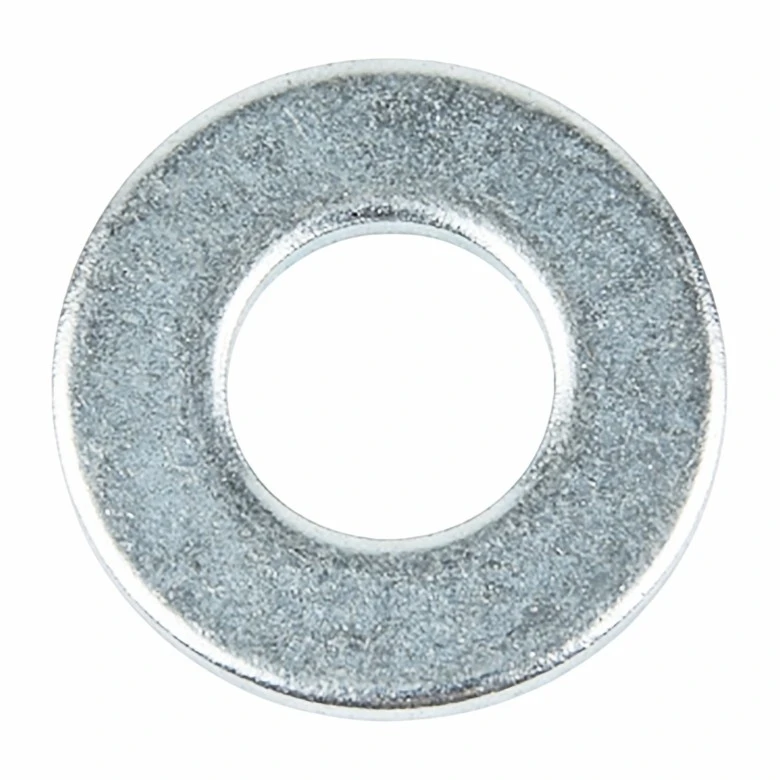
Next, the zinc coating. This is the whole point of plating, right? To prevent corrosion. The standard here is called “minimum thickness.” For most zinc plated flat washers, the zinc has to be at least 5 micrometers thick. Wait, what’s a micrometer? Think 0.0002 inches—super thin, but it’s a must. If the coating is too thin, it scratches off easy, and rust starts setting in. I’ve tested washers from no-name suppliers that had a zinc coating so thin, you could rub it off with your finger. That’s why we only source our washers from places that follow the thickness rule—we want our customers to not have to redo their project in a year because of rust.
There’s also something called “hydrogen embrittlement” to watch out for. When you plate steel with zinc, sometimes hydrogen gets trapped in the metal, making it brittle. If a washer is too brittle, it can crack when you tighten a bolt—this is a big deal for high-stress parts like automotive or heavy machinery. The standard requires that after plating, the parts get a “baking” process to get rid of that hydrogen. We make sure every single zinc plated flat washer we sell goes through this step—no exceptions. I’ve had a few clients in the auto industry specifically ask for baking-proof washers, and this is why.
Size and fit matter too. You wouldn’t use a ¼-inch washer on a ½-inch bolt, right? The standards cover exact inner and outer diameters, thickness, and how flat the washer has to be. If a washer is too thin, it won’t distribute the bolt’s pressure evenly, which can strip wood or crack metal. If the hole is too small, you can’t get the bolt through. We measure every batch of our zinc plated flat washers to make sure they’re spot on—no cutting corners here.
Wait, but not all zinc plated flat washers are the same. Sometimes people mix them up with other types, like Hot Dip Galvanized Flat Washers or Stainless Steel Flat Washers. Let’s clarify that real quick, because that’s a common mix-up. Hot dip galvanized is a heavier coating—way thicker than zinc plating, meant for outdoor heavy-duty stuff like bridges. Stainless steel is actually the metal itself, not a coating, so it’s more expensive but super rust-resistant. If someone needs a general-purpose washer that’s budget-friendly and rust-resistant, zinc plated is the way to go. We have all those options on our site if you want to check them out—linking Zinc Plated Flat Washers /washers/flat-washers/zinc-plated-flat-washer.html, Hot Dip Galvanized /washers/flat-washers/hot-dip-galvanized-flat-washer.html, and Stainless Steel /washers/flat-washers/stainless-steel-flat-washer.html for anyone curious.
Another thing: testing. A real supplier doesn’t just trust the specs—they test. We send batches of our zinc plated flat washers out to independent labs to check the coating thickness, no hydrogen embrittlement, and corrosion resistance. For example, a salt spray test—they spray the washer with salt water for a certain number of hours, and if no rust forms, it passes. Our washers usually go 500+ hours before any rust shows, which is way over the minimum required by standards. I know it’s extra work, but it’s how we make sure we’re not selling garbage.
Why does this all matter to you, the person buying these washers? Let’s say you’re building a shed. Cheap washers might rust in two years, and you have to take the whole shed apart to replace them. A quality zinc plated flat washer will last 10+ years, which saves you time and money. For businesses—like construction companies or furniture manufacturers—using non-standard washers can lead to warranty claims, which kills profit. I’ve had a customer who switched to our washers after their previous supplier’s parts rusted on a commercial deck job, and they saved thousands in repairs.
Wait, are there any exceptions? Yeah, sometimes smaller or specialty washers have slightly different standards, but the core stuff—base metal, zinc thickness, baking—stays the same. If someone tries to sell you zinc plated flat washers that skip those, that’s a red flag. As a supplier, I’d never do that—my reputation’s on the line, same as my customers’ projects.
Let me also talk about something I see a lot: people confusing “zinc plated” with other coatings. Like, zinc flake or zinc-nickel? Those are different, and they have their own standards too. But zinc plating is the most common, and it’s what we specialize in. The key takeaway here is that when a washer meets ASTM or SAE standards, you can trust it to do what it’s supposed to—protect against rust, distribute pressure, and hold up under stress.
If you’re in the market for zinc plated flat washers, do a quick check: ask your supplier if their parts meet ASTM F436 (that’s the standard for steel washers) or SAE J121 (for automotive). If they can’t tell you, or the numbers don’t add up, keep looking. We’re always happy to share our test reports and specs with anyone who asks—no hoops to jump through.
At the end of the day, these quality standards aren’t just paperwork. They’re there because 10+ years ago, suppliers weren’t following them, and projects failed. Someone had to step in and make rules to make sure these small parts didn’t cause big problems. That’s why I stick to them—you shouldn’t have to worry about whether your washers will hold up when you’re working on something important.
If you’re looking to order zinc plated flat washers, or just have more questions about our products, we’re here to help. We work with everyone from DIYers to big construction companies, so no job is too small or too large. Shoot us a message or reach out anytime to chat about what you need—we’ll make sure you get the right washers for your project.
References
ASTM International. (2023). Standard Specification for Steel Washers, Plain, for General Use. ASTM F436-23.
Society of Automotive Engineers. (2022). Standard for Steel Washers, Plain, and Shoulders for Use in Automotive Assembly. SAE J121-22.
International Organization for Standardization. (2021). Fasteners – Washers – Part 1: Plain Washers for Use with Bolts and Screws of Nominal Diameters M1.6 to M100. ISO 7089:2021.