


Electro-galvanizing, also known as cold galvanizing, is completely different from cold galvanizing in terms of production process, coating, corrosion protection, assembly, cost, and applicable scenarios. Handan Jihao Fasteners will introduce it from the following points.
I. Production Process (Fundamental Difference)
1. Hot-dip galvanizing
After the bolts are degreased and derusted, they are immersed in molten zinc at 450~500℃. The zinc reacts with the steel in a metallurgical process to form a zinc-iron alloy layer, and the coating and the substrate are fused together.
-High-temperature processing can lead to zinc nodules and drips, and zinc can easily accumulate on the threads.
-High processing temperatures necessitate the use of high-strength bolts of grade 10.9 and above, as high temperatures can reduce the strength of the steel and exacerbate the risk of hydrogen embrittlement.
2. Electro-galvanizing
Room temperature electrolysis process: Bolts are placed in zinc salt electrolyte, and an electric current is applied to allow zinc ions to deposit on the surface. This is purely physical adsorption, without an alloy layer.
-The entire process is conducted at low temperatures, without damaging the strength of the bolt substrate.
-The coating is uniform and fine, and the thread size remains almost unchanged.
-Electroplating is prone to hydrogen permeation; therefore, 8.8/10.9 grade high-strength bolts must undergo additional hydrogen removal treatment, otherwise they are prone to breakage.
II. Comparison of zinc layer thickness, appearance, and adhesion
| Comparative item | Hot-dip galvanized bolts | Electroplated galvanized bolts |
|---|---|---|
| Zinc layer thickness | National standard ≥55μm, standard 60~100μm, coastal/outdoor ≥85μm Chongqing scorching material | The coating is only 5~15μm thick, with a maximum thickness of no more than 25μm, making it extremely thin. |
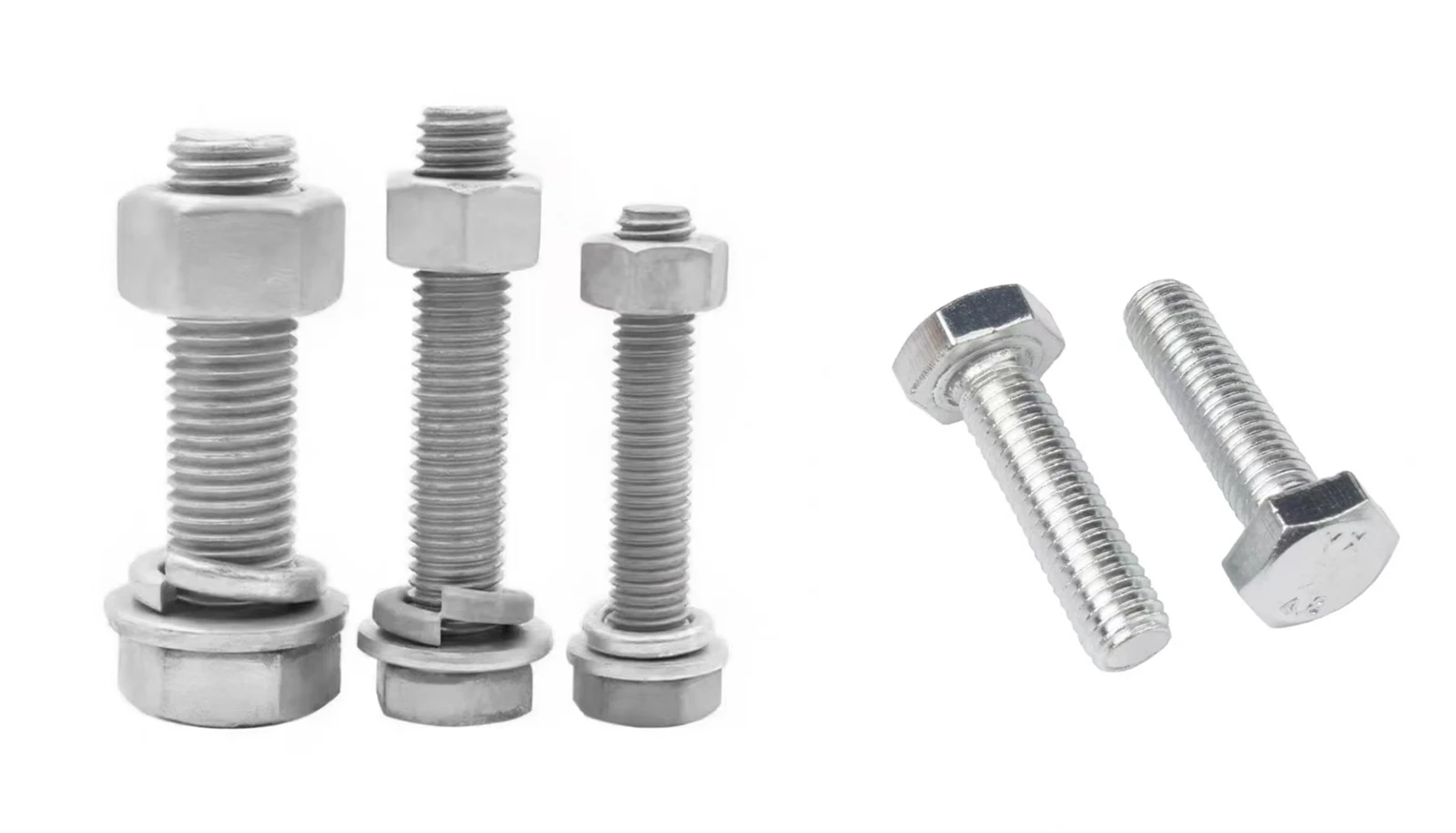
| Surface appearance | Grayish-white, matte and rough, with zinc spangles, zinc spikes, and bumps; overall appearance is ordinary. | Bright and smooth, it can be made of white zinc, colored zinc, or black zinc, and has strong decorative properties. |
| Coating adhesion | Metallurgical bonding prevents zinc from easily falling off during impacts and bending. | The rust is only physically attached; it's exposed by simply turning a wrench or slight friction. |
| Wear resistance | High-quality coating is durable and wear-resistant | Lower coating thickness is more prone to wear. |
| cost | Higher and longer service life | Lower processing costs and economy |
| Anti-corrosion properties | Excellent, suitable for outdoor and corrosive environments. | Generally, it is suitable for dry environments or indoors. |
III. Corrosion Resistance
1. hot dip galvanized
-Double protection: thick zinc layer isolation + sacrificial anode protection; even if the coating is scratched, the surrounding zinc will preferentially corrode and protect the steel.
-Salt spray test: The standard 85μm coating can withstand more than 1000 hours without red rust; it can be used outdoors and in coastal areas for 10 to 20 years or more.
2.Electro galvanized
-With only a thin layer of zinc for protection, the sacrificial protection is almost ineffective; once the coating is damaged, the steel will rust immediately.
-Ordinary colored zinc salt spray test results are only 72-200 hours; large-area rusting occurs in outdoor environments within 1-2 years, making it only suitable for dry indoor environments.
IV. Applicable scenarios
1.Hot-dip galvanized bolts
-Outdoor steel structures: bridges, photovoltaic supports, wind power systems, transmission towers, streetlights, guardrails
-Coastal salt spray, industrial zone acid and alkali, buried equipment, power fittings
-Projects that are exposed to the elements for extended periods and are difficult to maintain later.
2.Electroplated galvanized bolts
-Indoor equipment, cabinets, furniture hardware, and appliance housings
-Precision machinery, small assemblies, and parts with high appearance requirements
-Dry factory environment, rain-free and salt spray-free indoor working conditions
V. Summary of Advantages and Disadvantages
1.Hot-dip galvanized bolts
Advantages: Excellent corrosion resistance, long service life, strong coating, and impact resistance.
Disadvantages: Rough surface, requires special nuts for threads, expensive, unsuitable for ultra-high strength bolts at high temperatures.
2.Electroplated galvanized bolts
Advantages: Bright and beautiful appearance, smooth thread fit, precise dimensions, low cost
Disadvantages: Poor rust resistance, plating is easily worn off, short-term rusting outdoors, high-strength parts have hydrogen embrittlement risk.
If you require various electro-galvanized and hot-dip galvanized bolts, Handan Jihao Fasteners can provide you with professional one-stop service.
WhatsApp: +861311607537
Email: baiyanyun219@gmail.com