


In short: DIN, ISO, and GB are metric systems; SAE and ASTM are American systems, primarily using imperial (UN) threads, with a small number also having metric versions.
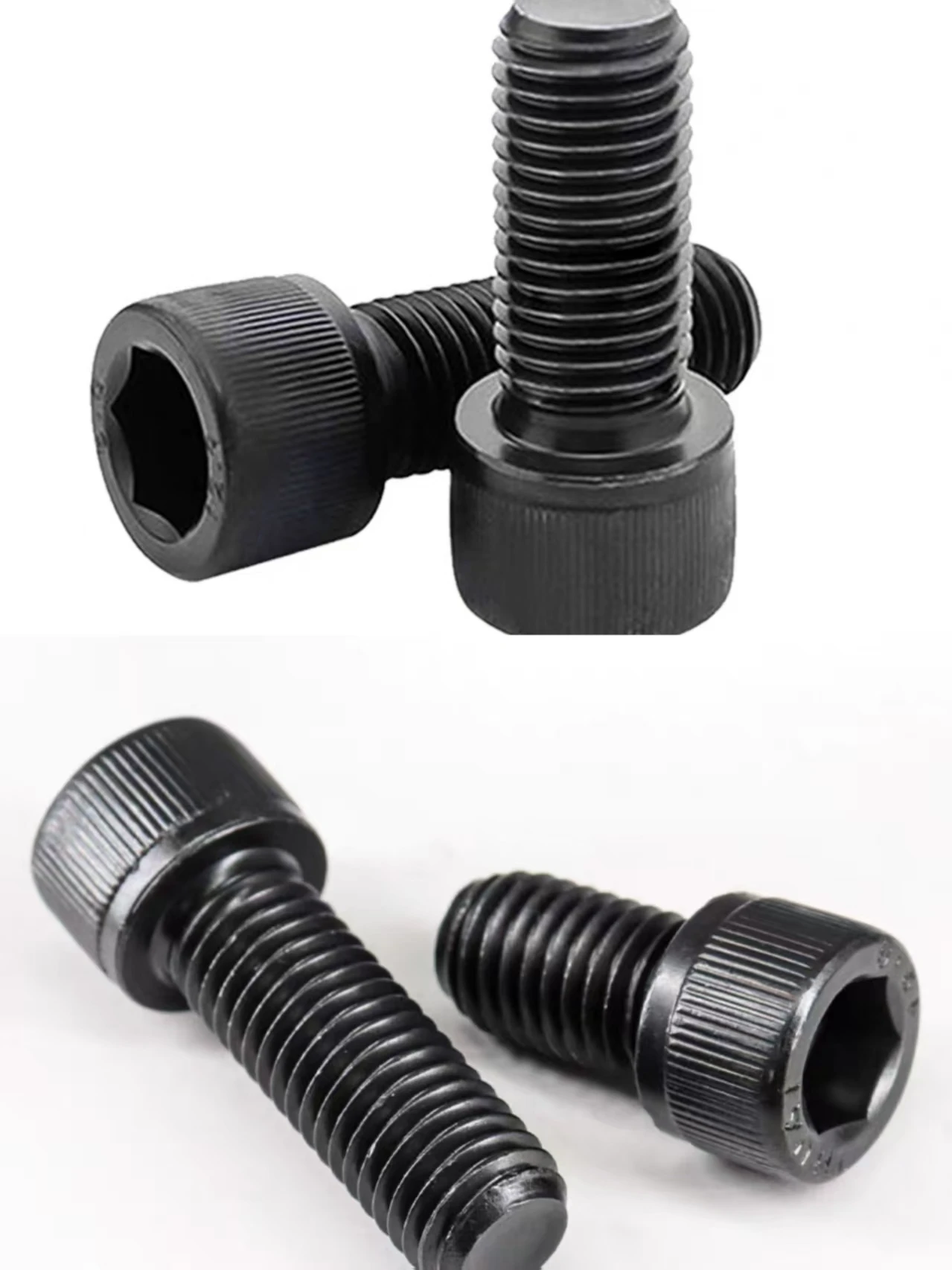
1. DIN (German Standard)
- Unit: Metric mm; Modern ISO standards heavily reference DIN in drafting.
- Core: Dimensions, shape, tolerances; Classic old standards (DIN933, DIN931, DIN934, DIN912) have extremely high adoption rates in the global fastener industry.
- Current Status: Many DIN standards have been superseded by ISO and are no longer updated; **Most standard parts are interchangeable in size, but there are slight differences in the hexagonal flats, nut height, and thread length of M10/M12/M14 bolts; safety parts are not directly interchangeable.**
- Applicable to: European customers, machinery, general equipment
>
> DIN933 Fully Threaded Hex Bolts = ISO4017; DIN934 Nuts = ISO4032; DIN912 Internal Hex Socket Head Cap = ISO4762
2. ISO (International Organization for Standardization)
- Unit: Metric mm, globally unified international standard
- Core: Universal international benchmark for fasteners, **ISO 898 is the core standard for mechanical performance**; GB/T 3098 is equivalent to the national standard of ISO 898...
- Features: Caters to industries in various countries, with the most stringent specifications for dimensions, tolerances, and performance grades, making it the preferred metric system for foreign trade
- Applications: Globally applicable, exported to many countries, high-end equipment, wind power, construction machinery
3. GB National Standard (China GB/T)
- Unit: Metric mm, GB/T recommended standards are equivalent to/modified to ISO
- Core: GB/T5782/5783 Hex bolts, GB/T6170 Nuts, GB/T3098 Mechanical properties
- Features: Domestic production, acceptance, and quality inspection standard; standard metric parts, dimensions and performance are basically interchangeable between national standards and ISO standards
- Applications: Domestic engineering, infrastructure, and equipment; metric orders for export to Europe/Southeast Asia
4.SAE International
- Units: Imperial (mainly Imperial), including metric M version (with M suffix, e.g., A193M)
- Core: Material + Heat Treatment + Operating Environment; widely used in structures, high/low temperature applications, pressure vessels, petrochemicals, and bridge construction.
>
> Classic: A325/A490 (steel structure bolts, new version F3125), A193 high-pressure bolts, A194 matching bolts, A320 low-temperature bolts, with mandatory requirements for material chemical composition, impact resistance, and high-temperature performance.
- Applications: Building steel structures, pipelines, pressure vessels, marine engineering, and petrochemical projects.
Summary of core differences
| standard | system | unit of measurement | focus | Typical industries | Thread |
|---|---|---|---|---|---|
| DIN | German Standard Metric | mm | External dimensions, old industrial system | european machinery | M (Metric) 60° |
| ISO | international metric system | mm | Universal dimensions + mechanical properties, international standards | Global export | M (Metric) 60° |
| GB | Chinese metric system | mm | Domestic production acceptance is equivalent to ISO standards. | Domestic infrastructure and equipment | M (Metric) 60° |
| SAE | American Standard | Inches (UN), small amounts in metric units | Mechanical performance grade (Grade), automotive mechanics | North American automotive and construction machinery | M (Metric) 60° |
| ASTM | American Standard | Inches (UN), small amounts in metric units | Materials, heat treatment, high and low temperatures, structural safety | Steel structures, petrochemicals, pressure vessels | M (Metric) 60° |
focus
1.Metric vs. US Standard Threads are not interchangeable: Metric threads (DIN/ISO/GB) and UN standard threads have different pitches and outer diameters; forced assembly will result in stripped threads.
2. DIN to ISO conversion: Most non-safety components are interchangeable; for pressure vessels and high-strength safety components, the hexagonal flats, nut height, and guaranteed load must be verified; they cannot be assumed to be interchangeable.
3. SAE vs. ASTM differences: SAE focuses on strength grade; ASTM focuses on material properties and environmental conditions. Customer drawings specifying SAE J429 Grade 8 only require mechanical strength; ASTM A193 B7 requires confirmation of material grade, high-temperature performance, and chemical composition.
4. GB/T (Chinese national standard) ≈ ISO; for domestically manufactured metric orders for export to Europe, GB/T can be used directly.
FAQ
Q1: Are DIN and ISO fasteners directly interchangeable?
A1: Most ordinary non-safety fasteners are similar in size, but there are slight differences in the hexagonal cross-sections, nut height, and thread length. Pressure vessels and high-strength safety fasteners are strictly prohibited from being directly interchanged and require confirmation of each parameter.
Q2: Can GB/T national standard fasteners replace ISO?
A2: GB/T is equivalent to ISO standard. The dimensions and performance of standard metric products are basically the same. Export metric orders can be produced using the national standard. It is recommended to confirm acceptance requirements with the customer in advance.
Fastener standards are more than differences in dimensions and grades; they directly affect assembly safety, project acceptance and foreign trade delivery. DIN, ISO, ASTM, SAE and GB apply to different scenarios. Similar specifications do not mean full interchangeability. Do not replace standards arbitrarily for safety-critical applications such as steel structures, pressure vessels and construction machinery. Before selection, quotation and production, please verify drawing requirements, thread types, mechanical properties and material specifications to avoid assembly failure and order rejection. If you need fastener standard selection, specification verification or custom supporting solutions, welcome to contact our technical team.