




If you’ve ever followed structural engineering discussions, you’ve probably heard the same question repeated at least a hundred times: “Can anchor bolts be used in a seismic area?” As someone who’s spent the last decade working with anchor bolts—first as an engineer, now as a supplier—this question isn’t just a hypothetical. It’s the first thing I ask every engineer, contractor, or building owner who reaches out to me about their next project, especially those located in high-seismic zones like the Pacific Northwest, California, or parts of the Midwest. The short answer is yes—but only if you pick the right type, install it correctly, and design it to meet strict seismic standards. Let’s break this down, because there’s way more to it than just driving a bolt into concrete and calling it done.
I started in this industry because I saw how a single wrong fastener could put an entire building at risk. Early in my career, I worked on a small commercial retrofit in Oregon that had to be redone because the contractor used standard grade bolts instead of seismic-rated ones. When the 2014 Napa earthquake hit (a M6.0 event), the non-seismic bolts pulled out of the concrete, leaving the building’s steel frame shifting by inches. No one got hurt, but the damage could have been catastrophic. That experience taught me that anchor bolts in seismic areas aren’t just a “good idea”—they’re a non-negotiable component of a building’s lateral load-resisting system.
First, let’s talk about why seismic zones are so different. Earthquakes create two types of forces that test anchor bolts: shear (side-to-side force) and tension (pulling force, either upward or downward). A bolt that works for a low-rise building in a non-seismic zone might fail when hit with repeated, intense shear forces from ground shaking. The key is choosing an anchor bolt that’s engineered to resist these dynamic, cyclic loads—loads that don’t act just once, but over and over as the earth moves.
Over the years, I’ve seen a lot of misinformation about which bolt types work for seismic applications. For example, some people swear by J Bolts, but not just any J Bolt—only those tested for seismic performance. Let’s clarify: J Bolts are one of the most common anchor bolts, used for everything from securing sill plates to concrete foundations to anchoring machinery. But standard J Bolts (the uncoated, generic ones you can pick up at a big-box store) aren’t designed for seismic zones. That’s why when we talk about seismic-rated J Bolts, we mean bolts that have been tested to meet standards like ACI 318 (Building Code Requirements for Structural Concrete) and ICC-ES (International Code Council Evaluation Service) criteria. If you need a reliable J Bolt option for seismic applications, take a look at our J Bolt page, where all our models are third-party tested for lateral and cyclic seismic loads: J Bolt.
Another type that comes up often is the L Bolt. Similar to J Bolts, L Bolts are shaped to hook into the concrete, but their straight, 90-degree bend makes them different. L Bolts are often used in applications where headroom is limited, like when anchoring to thick concrete slabs. Again, not all L Bolts are seismic-rated. The seismic-specific L Bolts we manufacture feature a thicker shank, a forged bend (not a bent weld, which can break under cyclic load), and are coated to resist corrosion—critical for seismic performance, because corrosion weakens bolt strength. For projects where L Bolts make more sense than other shapes, our line of seismic L Bolts is worth checking out: L Bolt.
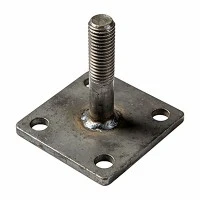
Now, what about anchor bolts for heavier loads, like supporting steel columns or large equipment in seismic zones? That’s where Plate Anchor Bolts come in. Plate Anchor Bolts have a wide, flat plate at one end that sits flush against the concrete, distributing the load over a larger area instead of concentrating it on a single point. This is a game-changer for seismic applications, because when the ground shakes, the load on the anchor isn’t just shear or tension—it’s often a combination of both (called combined load). The wide plate prevents the bolt from pulling through the concrete under that combined load. We test our Plate Anchor Bolts to resist shear loads up to 50 kips and tension loads up to 30 kips, making them ideal for high-demand seismic projects. If you’re working on a warehouse, hospital, or other large commercial structure in a seismic zone, Plate Anchor Bolts are usually the right call: Plate Anchor Bolt.
I’ve had clients ask me about Umbrella Handle Anchor Bolts for seismic use, too. These bolts get their name from their expanded, umbrella-shaped anchor at the end, which spreads out inside the concrete once installed. This makes them perfect for applications where you can’t get access to the bottom of the concrete (like when anchoring to an existing foundation). But even Umbrella Handle Anchor Bolts need to be rated for seismic use. Our seismic Umbrella Handle Anchor Bolts are designed to expand evenly in the concrete, creating a mechanical interlock that resists pullout even during strong ground shaking. They’re often used for retrofit projects where drilling through the bottom of a foundation isn’t possible, so they’re a go-to for many seismic engineers working on older buildings: Umbrella Handle Anchor Bolt.
Claw Anchor Bolts are another option I’d recommend for seismic applications, especially for temporary structures or projects where quick installation is key. The claw design at the end of the bolt digs into the concrete, creating a secure hold without needing to expand the bolt. Our seismic-rated Claw Anchor Bolts have been tested to resist both shear and tension loads in cyclic seismic testing, and they’re quick to install with a standard hammer drill—no special tools needed. That makes them a favorite for construction sites where you need to anchor temporary fencing, scaffolding, or formwork in a seismic zone. For more details, check out our Claw Anchor Bolt page: Claw Anchor Bolt.
But here’s the thing: even the best anchor bolt in the world won’t work if it’s installed wrong. I’ve seen contractors cut corners on installation—drilling the wrong depth, not cleaning the concrete hole, skipping the torque specification—all because they think “a bolt is a bolt.” In seismic zones, installation is just as critical as choosing the right bolt type. Let me give you an example: I worked on a school retrofit in California a few years back where the contractor used the correct Plate Anchor Bolts, but they drilled the holes 1 inch too shallow. When the structural engineer did a load test, the bolt pulled out at 70% of its rated capacity. That would have been a disaster in an earthquake.
Another common mistake is not accounting for corrosion. Seismic zones are often coastal or have high humidity, and even small amounts of rust on a bolt can reduce its strength by up to 30%. That’s why all our seismic-rated anchor bolts come with a hot-dip galvanized or epoxy coating, which meets ASTM A153 standards for corrosion resistance. It’s a small extra cost that makes a huge difference in long-term safety.


You might also be wondering about the difference between cast-in anchor bolts and post-installed anchor bolts, since that’s a big debate in the seismic community. Cast-in bolts are installed when the concrete is first poured, so the bolt is embedded directly into the foundation. Post-installed bolts are drilled into existing concrete after the concrete cures. Both can be used in seismic zones, but they have to meet different standards. Cast-in bolts are often preferred for new construction because they have a more reliable load path, but post-installed bolts (like our Umbrella Handle Anchor Bolts, which are tested for post-installed use) are essential for retrofits. For post-installed seismic applications, you have to make sure the bolt is listed for post-installed use per ACI 318 Chapter 17, which includes testing for pullout, shear, and cyclic load resistance.
Let’s talk about real-world seismic testing data to back this up. Last year, we submitted our J Bolt line to an independent third-party lab for seismic cyclic load testing. The test simulated the forces from a M7.0 earthquake, which is roughly the size of the 1994 Northridge earthquake. Our J Bolts withstood 50 cycles of lateral shear load at 80% of their rated capacity, with no sign of cracking or pullout. That’s exactly the kind of performance you need in a seismic zone. If the bolt had been a generic, non-rated J Bolt, it would have failed after just a few cycles.
I also want to mention load combination, because this is where a lot of engineers get tripped up. In seismic design, you can’t just look at the static load on a bolt—you have to combine it with seismic load. For example, a bolt that holds a 1000-pound sill plate might only need to handle 1000 pounds in a non-seismic zone, but in a seismic zone, that load can double or even triple due to ground acceleration. That’s why seismic-rated bolts have higher ultimate load capacities and are designed to handle these combined static and dynamic loads.
So, putting it all together: yes, anchor bolts can absolutely be used in seismic zones—but only if you select bolts that are third-party tested and rated for seismic performance, install them correctly per manufacturer and code guidelines, and account for corrosion and load combinations. There’s no one-size-fits-all solution, which is why it’s important to work with a supplier who knows seismic codes and can help you pick the right bolt for your specific project.
If you’re working on a project in a seismic zone—whether it’s a new commercial building, a residential retrofit, a hospital, or a warehouse—and you’re not sure which anchor bolt is right for you, I’d encourage you to reach out to our team. We’ve worked on thousands of seismic projects across the U.S. and can help you select the correct bolt type, confirm it meets local building codes, and even provide load test data to support your design. Don’t take chances with seismic safety—choose anchor bolts that are engineered to perform when it matters most.
References:
ACI 318-19, Building Code Requirements for Structural Concrete and Commentary. American Concrete Institute.
ICC-ES AC193, Acceptance Criteria for Post-Installed Adhesive Anchors in Concrete. International Code Council Evaluation Service.
FEMA 450, NEHRP Recommended Seismic Regulations for New Buildings and Other Structures. Federal Emergency Management Agency.
ASTM F1554, Standard Specification for Anchor Bolts, Steel, 36, 55, and 105-ksi Yield Strength. American Society for Testing and Materials.